Scott Edelman
  • Home
  • Blog
  • About
  • Writing
    • Short Fiction
    • Books
    • Comic Books
    • Television
    • Miscellaneous
  • Editing
  • Podcast
  • Contact
  • Videos

©2026 Scott Edelman

Does the past owe the present an explanation?

Posted by: Scott    Tags:  China Mieville, The Magic Pudding    Posted date:  March 4, 2012  |  2 Comments


China Miéville’s excellent essay on whether racially problematic literature of the past needs to be put in context and how asking for that to be done isn’t the same as calling for censorship makes me recall when I encountered the Australian children’s classic The Magic Pudding … and how it caused me to wince.

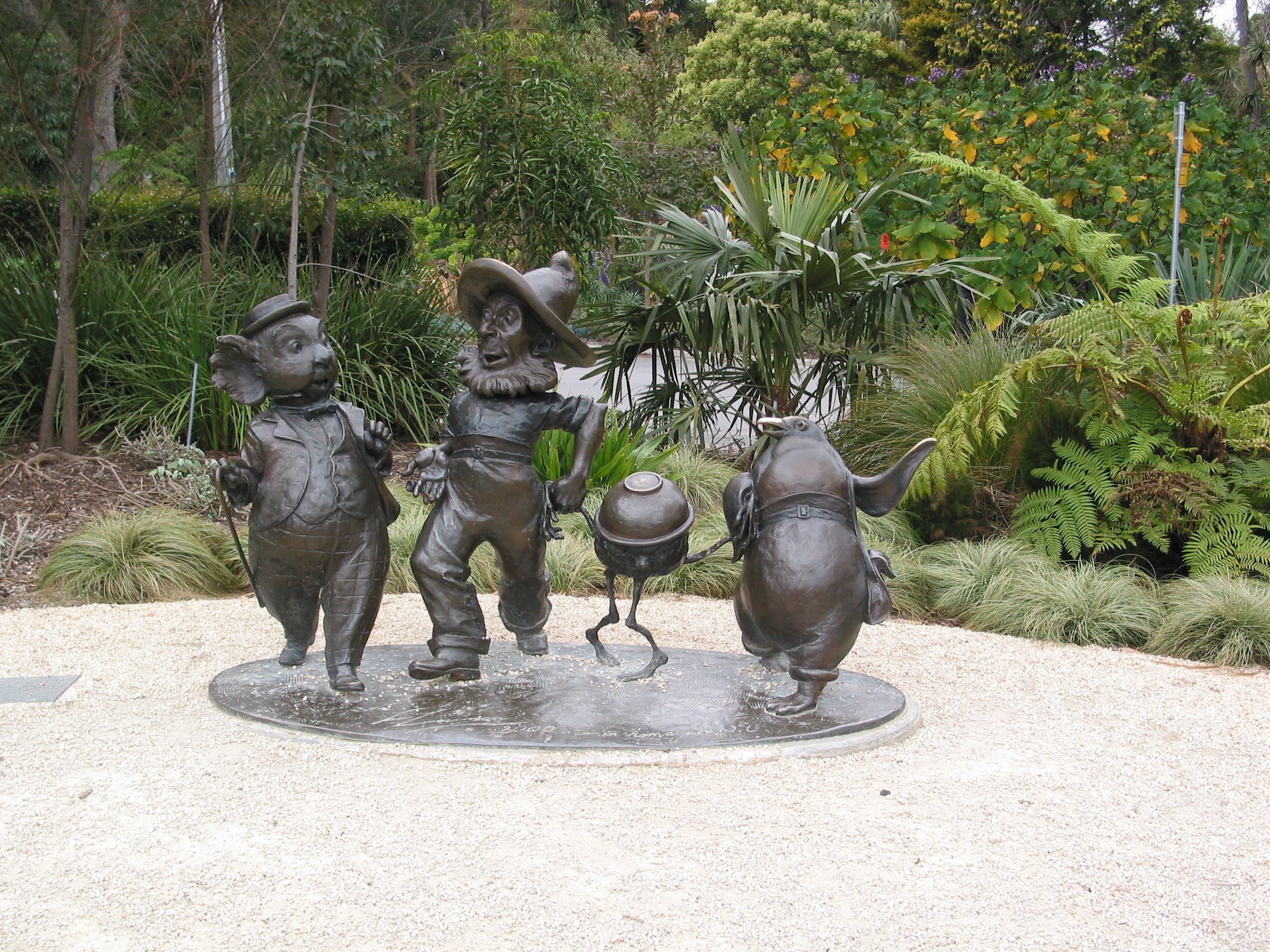
Irene and I visited Australia for the first time in 2003, and while wandering Melbourne’s Royal Botanic Gardens, we came across this whimsical statue.

We had no idea who any of these characters were, nor why they were deserving of such celebration. We struck up a conversation with another couple nearby, and soon learned that the quartet was from the Norman Lindsay book The Magic Pudding: Being The Adventures of Bunyip Bluegum and his friends Bill Barnacle and Sam Sawnoff, which Australians consider a work on par with Alice in Wonderland or The Wizard of Oz. So I of course had to track down a copy before we left the country.

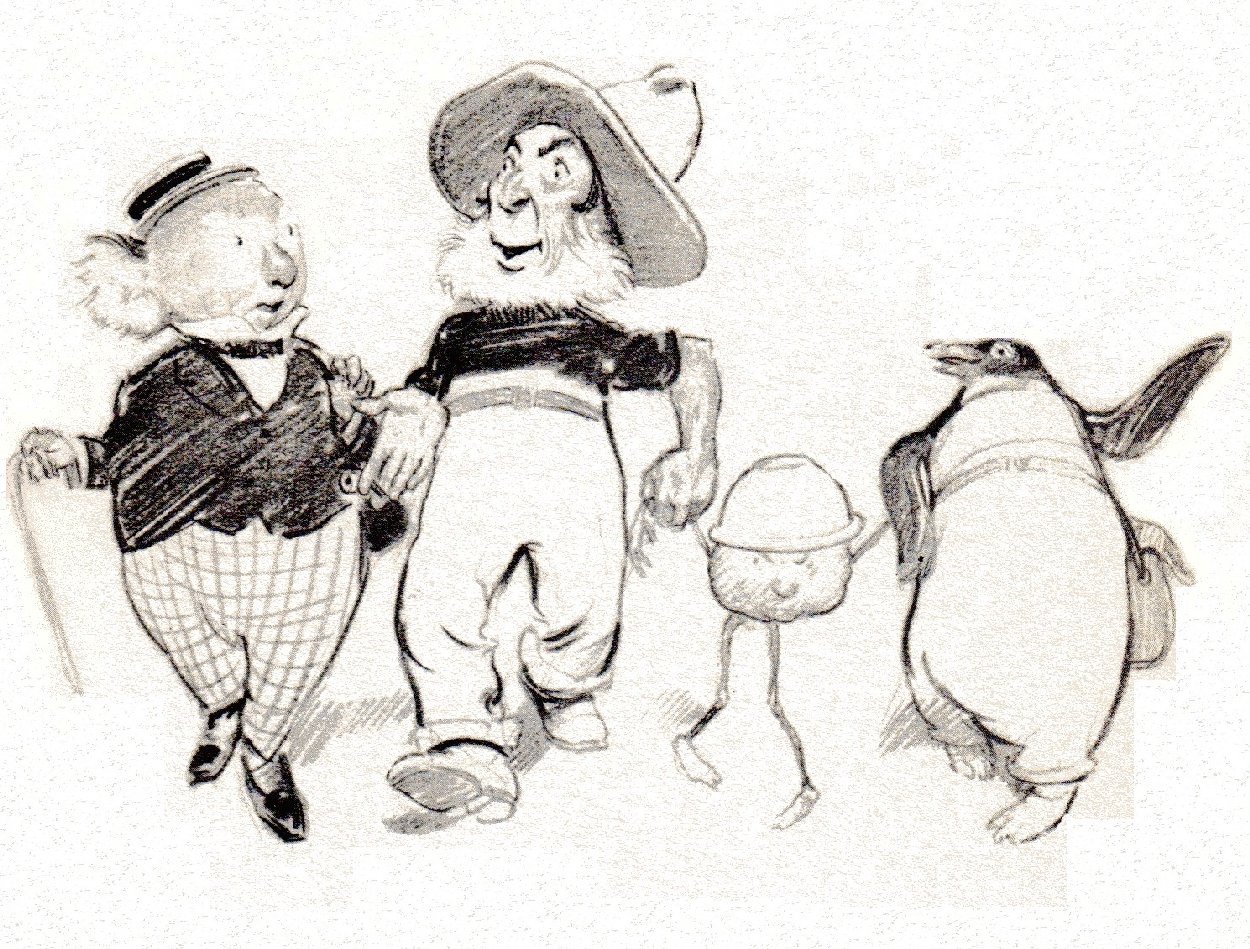
Not that there was much “tracking” involved, because it was indeed such an important book in Australia that copies were in every bookshop and department store. So that afternoon, I saw the illustration which had inspired the statue.

I saved the book to read on our flight home, and it was wonderful, all about a koala named Bunyip Bluegum, a sailor named Bill Barnacle, a penguin named Sam Sawnoff, and a grumpy magic pudding named Albert—magic because no matter how much you’d eat him, he’d always still be there, whole, apparently infinite, walking around with extruded arms and legs and a pot on his head.

Anyway, the adventures the four have are marvelous and magical, and I was smiling and chuckling away on my flight—until I got to the part where my chuckling stopped.

Deep into the book, on page 164, a judge says the following during a trial:

If what you say is true,
That idea you’ll sadly rue,
The poison I have eaten is entirely due to you.
It’s by taking your advice
That I’ve had my seventh slice,
So I’ll tell you what I’ll do
You unmitigated Jew,
As a trifling satisfaction,
Why, I’ll beat you black and blue …

And I thought … Oh, Norman Lindsay, why did you have to go there?

Having read that passage, I found myself unable to recommend The Magic Pudding as wholeheartedly as I’d felt I could up until then. There’d always have to be a caveat, a warning, an explanation. When talking about the book, I’d have to say that, well … you have to understand this was first published in 1918, and some of the attitudes that were in the air at the time have made it into its pages, so think about that before you choose whether or not to go ahead and read. Yes, the book is still worthy, but page 164 can’t be read without going “Ouch!”

I’m thinking about this because Miéville’s essay springboards off a case in which:

Bienvenue Mbutu Mondondo was applying to the court to have Tintin in the Congo declared unacceptable under the Belgian race relations law. However, he had made clear for years that he would be satisfied if, as in Britain, the book was published with a visible warning, a reminder of the context in which it was written (maybe even of the toxic ideology enshrined within). What Mondondo wanted was an official recognition that this text was a spitting in his face.

Which immediately brought to mind The Magic Pudding, a work published as part of a line of (as it says on the back cover) “quality paperbacks for children from Angus & Robinson” with no attempt to place it within the context of its time. If tripping over “unmitigated Jew” used as a insult irritated me so much nine years ago that it so easily came to mind now, what would the reaction be of its intended non-academic (and young) audience when the words are encountered with no explanation? Who might wrongly understand it to be accepted usage? Who might be made to feel less than?

Do I believe the text of The Magic Pudding should be altered? No. But I do believe that some once-common ideas are now so odious that some context becomes necessary. And that explanation would occur, I hope, not because it is made mandatory by law, but because it is the right and proper (and caring and courteous) thing to do.

As Miéville comments on such unfiltered works:

It is a strange, depraved morality that chooses relentless fidelity to racist texts over consideration of the day-to-day lives of children & others.

Agreed.


2 Comments for Does the past owe the present an explanation?


James

Ahhh, no, It’s not a wonderful essay. As for the parts you quote: Texts don’t spit, it’s a metaphor, and you need something better then a metaphor in a lawsuit. China spends 2000 + words showing there wasn’t anything more. I’m having trouble deciding if you agreed to a simply specious statement, or if it was a Strawman. I know it’s not worth the effort to decide.

Dead people and the past can’t owe us anything, it’s sort of impossible. Yea, I know, it’s a turn of phrase, but it hides the truth. The real question is what do we owe ourselves and the future in relation to these texts, they don’t belong to the past, they belong to us.

I checked around and there are versions of The Magic Pudding with the “Jew” couplet edited out. What would have happened if you had bought one of those?

    Scott

    If I’d bought a copy of The Magic Pudding with that passage edited out, I wouldn’t have known it was edited out, and therefore would have had no reaction to the change. But if I had been aware it was supposed to be there, and discovered it missing, I’d have been upset, because my preferred method of dealing with things like this is to create a context, not to erase the past. Which is why I don’t care for the recent editing of The Adventures of Huckleberry Finn.


  • Follow Scott


  • Recent Tweets

    • Waiting for Twitter... Once Twitter is ready they will display my Tweets again.
  • Latest Photos


  • Search

  • Tags

    anniversary Balticon birthdays Bryan Voltaggio Capclave comics Cons context-free comic book panel conventions DC Comics dreams Eating the Fantastic food garden horror Irene Vartanoff Len Wein Man v. Food Marie Severin Marvel Comics My Father my writing Nebula Awards Next restaurant obituaries old magazines Paris Review Readercon rejection slips San Diego Comic-Con Scarecrow science fiction Science Fiction Age Sharon Moody Stan Lee Stoker Awards StokerCon Superman ukulele Video Why Not Say What Happened Worldcon World Fantasy Convention World Horror Convention zombies